When Should Adults Consider Orthodontic Treatment for Crowded or Misaligned Teeth?
Adults should consider straightening their teeth when crowding, spacing, or a bite that feels off starts to affect how they chew, clean, or feel about their smile. There is no upper age limit. At Simply Smiles, we see adults in their twenties through their sixties who decide that now is the right time to correct teeth they have worked around for years. Healthy teeth and gums matter far more than a birth date, and modern clear aligners make the process discreet enough to fit a professional schedule.
This Article Will Address
- Whether age limits your options
- How crowding and misalignment affect long-term oral health
- Signs that your bite may be off
- Treatment choices and how clear aligners compare to braces
- Typical timelines and what to expect with existing dental work
- What happens during your first visit
Is It Too Late to Straighten My Teeth as an Adult?
No, it is not too late. Teeth move in response to gentle, steady pressure at any age, as long as the gums and supporting bone are healthy. Adult teeth may take somewhat longer to shift than a teenager’s, but the results can be just as stable with consistent retainer wear afterward.
Many adults missed treatment as children, while others had braces years ago and noticed their teeth drifting back over time. Both groups are strong candidates for adult teeth straightening today. Adults also tend to be highly motivated patients. They follow wear instructions closely, keep appointments, and value the result, which often leads to smooth, predictable progress.
What Problems Can Crowded or Misaligned Teeth Cause Over Time?
Crowded or misaligned teeth make cleaning harder and place uneven force on your bite, which raises the risk of decay, gum disease, and wear. Overlapping teeth create tight spaces where plaque collects and floss struggles to reach. Over the years, the effects can build on one another:
- Cavities between overlapping teeth
- Gum inflammation and recession around crowded areas
- Chipped or flattened edges from teeth striking at the wrong angle
- Jaw soreness or headaches linked to an uneven bite
- Increased strain on crowns, fillings, and other dental work
Correcting alignment early helps protect the teeth and restorations you already have. Crowding also tends to worsen with age as teeth naturally drift forward, so a concern that seems minor at 30 can become far more noticeable by 50.
How Do I Know if My Bite Is Off?
Your bite may be off if your teeth do not meet evenly when you close, or if you notice wear, soreness, or chewing difficulty on one side. A misaligned bite, also called a malocclusion, is not always visible in the mirror. Common signs include:
- Upper front teeth that overlap the lowers too much or sit behind them
- Teeth that do not touch at all in certain areas when you bite down
- Frequent cheek or tongue biting
- Clicking, tension, or fatigue in the jaw
- Food that consistently packs between the same teeth
A comprehensive exam with digital imaging gives Dr. Phu a clear picture of how your teeth and jaws meet. Even if your bite has felt this way for years, that does not mean it is normal. Many patients adapt to an uneven bite without realizing how much extra effort their jaw muscles are doing every day.
What Orthodontic Options Are Available for Adults?
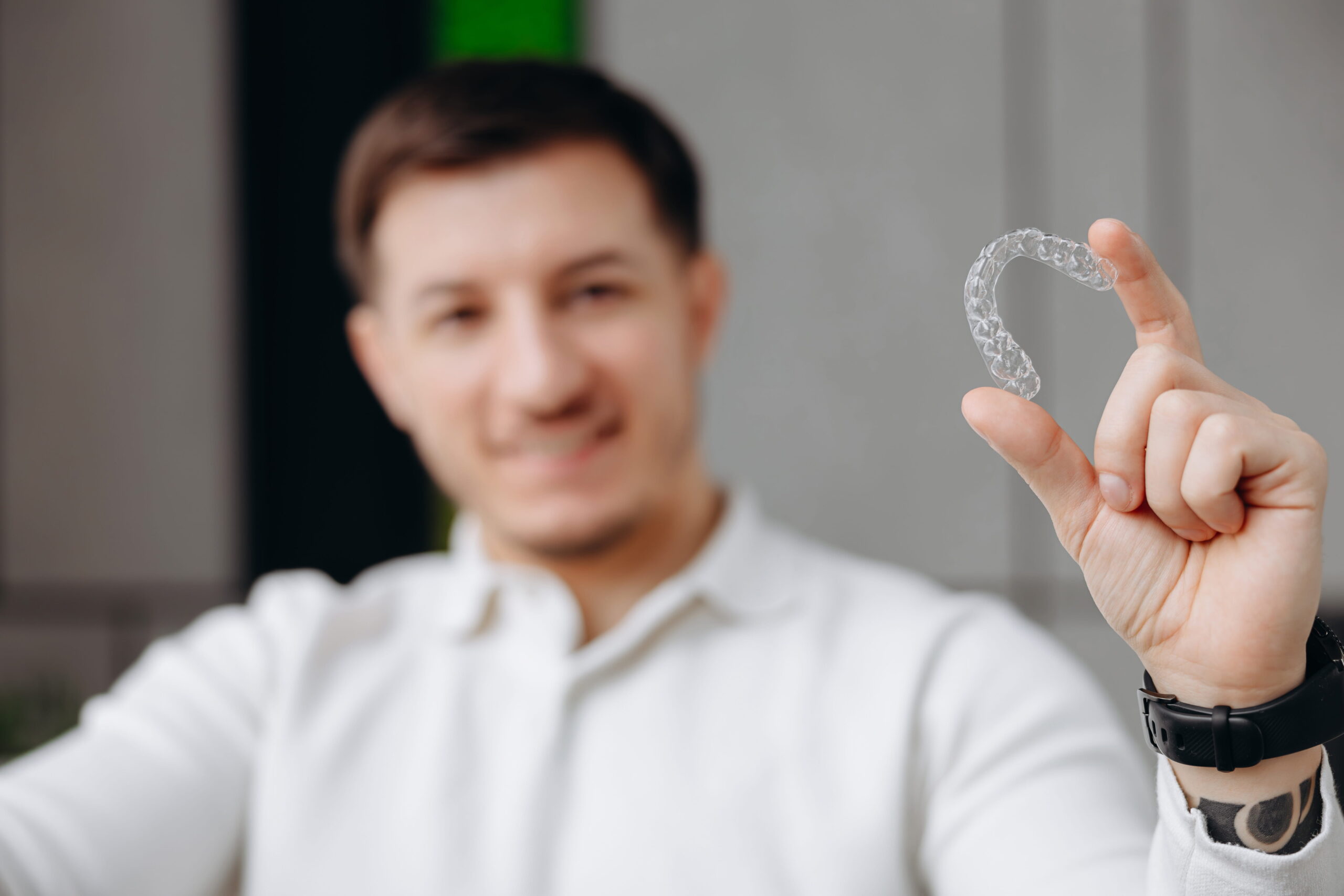
Adults today generally choose between traditional braces and clear aligners. Braces use brackets and wires bonded to the teeth, while aligners use a series of removable, nearly invisible trays. At our office, we provide SureSmile clear aligners, which many working adults prefer because they can be removed for meals, brushing, and important meetings. You can review our full approach to orthodontics to see how aligner care fits into your broader dental plan.
Each approach has trade-offs. Braces stay on the teeth full time, which removes the need for wear-time discipline, but they come with food restrictions and require more effort to clean. Aligners are removable and discreet, yet they only work when worn as directed. Dr. Phu will help you weigh these factors against your lifestyle and the type of movement your teeth need.
Are Clear Aligners as Effective as Traditional Braces for Adults?
For most mild to moderate crowding, spacing, and bite concerns, clear aligners deliver results comparable to braces. Each custom tray applies precise, gradual pressure based on a digital treatment plan, moving teeth in planned stages.
Success depends on wear time. Aligners work best when worn 20 to 22 hours a day, so they suit patients who are ready to commit to that routine. Severe skeletal bite problems or complex tooth rotations may still call for fixed braces or care from an orthodontic specialist, and Dr. Phu will tell you directly if your case falls into that category. Aligners also make daily hygiene easier. Because the trays come out, you can brush and floss normally, which helps adults with a history of gum concerns keep their tissues healthy throughout treatment.
How Long Does Adult Orthodontic Treatment Usually Take?
Most adult aligner cases take about 12 to 18 months, while minor corrections can finish in six months or less. The timeline depends on how far the teeth need to move, the complexity of the bite, and how consistently the aligners are worn.
After active treatment, a retainer holds your teeth in their new positions. Retainer wear is what protects your investment, especially for adults whose teeth have a history of shifting. Check-in visits are typically scheduled every several weeks so Dr. Phu can confirm that your teeth are tracking as planned and adjust the approach if needed.
Can I Get Orthodontic Treatment if I Have Crowns, Bridges, or Missing Teeth?
Yes, in most cases you can. Crowns and implant-supported teeth can be accommodated in an aligner plan, though a fixed bridge connects teeth and may limit how those specific teeth move. Missing teeth often cause neighboring teeth to tip into the gap, and straightening first can create the right space for a future dental implant restoration or new bridge.
Coordinating the sequence matters. Dr. Phu plans alignment and restorative work together so each step supports the next, rather than treating them as separate projects. Patients with mild gum recession or bone loss can often still move forward, though we make sure the gums are stable before treatment begins.
What Happens at an Adult Orthodontic Consultation?
Your consultation is a thorough evaluation of your teeth, gums, bite, and goals, followed by a clear explanation of your options. During the visit, you can expect:
- A review of your dental history and the concerns you want addressed
- An exam of your teeth, gums, and existing restorations
- Digital X-rays and an intraoral scan in place of messy impressions
- A preview of how your teeth could move with aligners
- A discussion of timeline, wear expectations, and next steps
Dr. Phu Vuong is known for explaining each step plainly, so you leave with a complete understanding of your plan and no unanswered questions. There is no obligation to begin treatment at the consultation. The goal is to give you the information you need to make a confident decision.
Schedule Your Adult Clear Aligner Consultation Today
Simply Smiles is welcoming new adult patients and would be glad to evaluate your smile. Whether you want to correct crowding, close spaces, or improve your bite, our team is ready to help adults in Lavon, TX, Wylie, and nearby communities take the next step. Explore our dental services or contact our office by phone or email to schedule your consultation.
Sources
Join Our Dental Family
Eager to serve you and offer a unique dental experience! Schedule your appointment at Simply Smiles, your go-to dental office near Lavon TX, and embark on a journey toward perfect oral health.
Join Our Dental Family
Eager to serve you and offer a unique dental experience! Schedule your appointment at Simply Smiles, your go-to dental office near Lavon TX, and embark on a journey toward perfect oral health.