
What Advanced Dental Technology Helps Make Treatment Faster, More Comfortable, and More Precise?
Dental care feels faster and more comfortable when it is built on better information. When a dentist can see a tooth clearly, measure it accurately, and show you the same image on a screen, fewer appointments get repeated and fewer problems go unnoticed.
Advanced dental technology does exactly that. Digital X-rays, intraoral scanners, 3D imaging, and quieter rotary instruments each remove a step that used to be slow or unpleasant. At Simply Smiles in Lavon, TX, these tools are part of routine exams, crown appointments, and simple root canals, not an upgrade held back for unusual cases.
This Article Will Address
- Why digital tools change how an ordinary appointment feels
- How a handheld scanner takes the place of impression putty
- What digital X-rays capture, and how they compare to film
- How 3D and panoramic images guide precise treatment planning
- Which options keep nervous patients comfortable in the chair
How Does Digital Dentistry Improve the Overall Patient Experience?
Digital dentistry improves the experience by closing the gap between what the dentist sees and what you understand. Images appear on a monitor within seconds, scans are reviewed while you are still in the chair, and records reach the dental laboratory electronically instead of by courier. That speed changes the tone of a visit. Rather than waiting to hear what a film shows, you look at the same picture Dr. Phu Vuong is looking at and hear the reasoning behind a recommendation before you agree to it.
It also cuts down on repetition. A digital record can be pulled up again for a follow-up comparison, a second look, or a laboratory remake without asking you to return for another set of images. Across our general and family dental services, that means fewer trips back for something already captured correctly the first time, and a clearer history of how your teeth have changed from one year to the next. Patients who transfer from another practice often arrive with no records at all, and a fresh set of digital images takes only a few minutes to establish a baseline we can measure against from that day forward.
What Is Intraoral Scanning and How Does It Replace Traditional Impressions?
An intraoral scanner is a small handheld camera that builds a detailed digital model of your teeth from thousands of images, which means trays full of impression material are no longer needed for most cases. You sit upright while the wand passes over each arch, and the model takes shape on the screen as the scan progresses. The practical differences show up quickly:
- Nothing sets in your mouth, so there is nothing to gag on and no waiting for material to harden
- A missed area is rescanned on the spot instead of at a second appointment
- The digital file reaches the laboratory the same day, which trims waiting time off lab-made restorations
- One scan serves several purposes, including records for dental crowns and bridges and treatment setups for SureSmile clear aligners
Crowns are still fabricated by a dental laboratory here, so the process involves a preparation visit and a placement visit. Digital dental impressions do not eliminate that second appointment. What they eliminate is the retake, the distorted mold, and the restoration that arrives needing heavy adjustment because the original impression shifted while it set.
How Does Digital X-Ray Technology Compare to Traditional X-Rays?
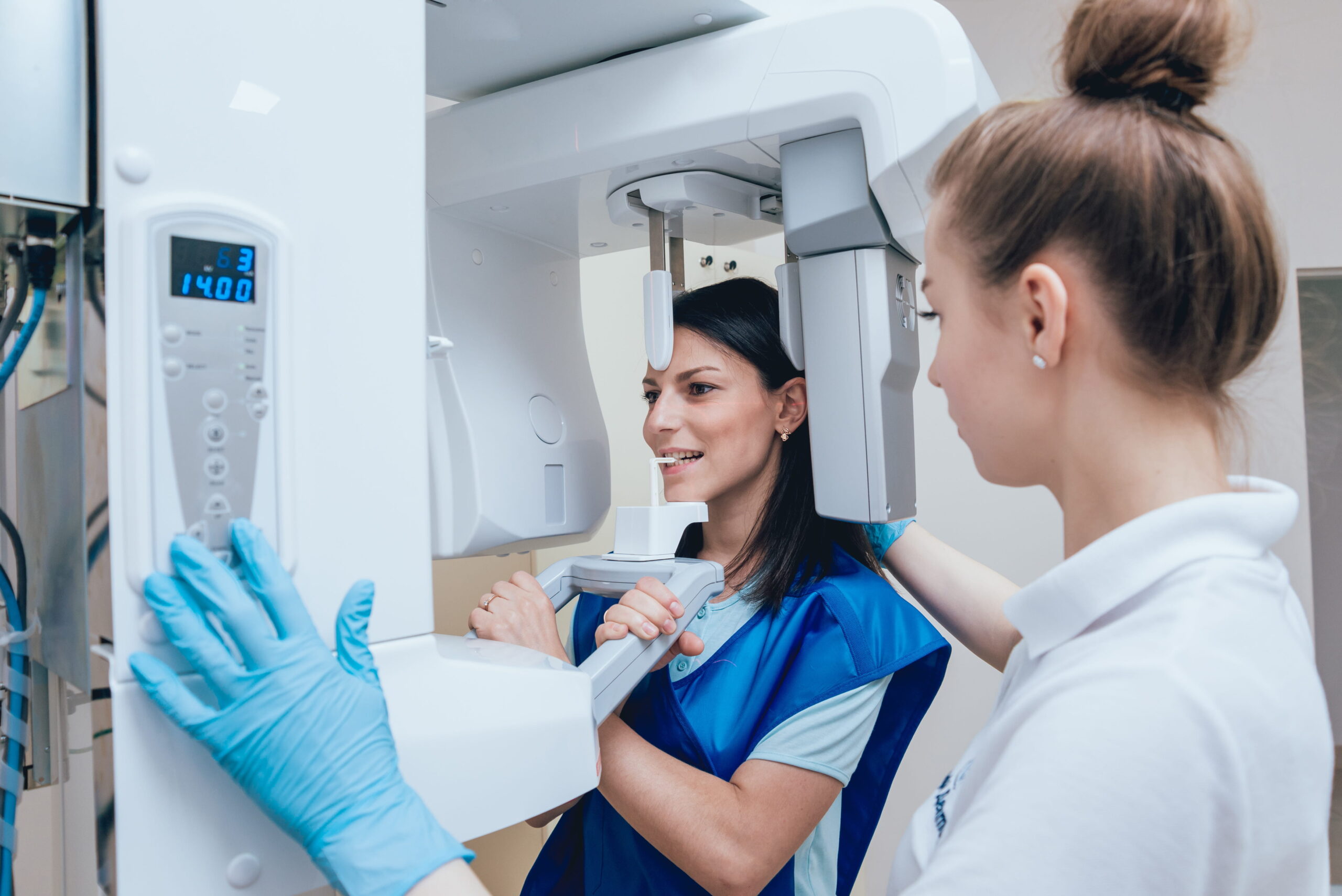
Digital X-rays use an electronic sensor instead of film, which lowers radiation exposure considerably and delivers the image almost instantly. Film had to be developed with chemicals in a darkroom before anyone could read it. A sensor sends its image straight to the computer, where it can be enlarged and adjusted. For patients, the differences are concrete:
- A smaller radiation dose than film radiographs, which matters most for children and anyone who needs imaging more than once a year
- Images ready in seconds, so a suspected cavity or infection is discussed during the same visit
- Magnification and contrast controls that reveal early decay and bone loss easy to miss on a small film
- Direct comparison against last year’s images, which makes slow changes visible before they turn into emergencies
- No processing chemicals and no film to store or discard
Panoramic X-rays add the wider view. A single rotation around the head captures the full upper and lower jaw, the sinuses, and the jaw joints in one image. That perspective is how we follow wisdom teeth, check bone levels before implant restoration, and confirm that a child’s permanent teeth are developing where they belong.
How Does 3D Imaging Help Dentists Plan Treatment with More Precision?
3D dental imaging adds depth, and depth is what determines whether a restoration actually fits. A flat picture cannot show how far a prepared tooth tapers or exactly how the opposing teeth meet it. A three-dimensional model can be rotated, measured, and checked against the bite before any restoration is designed, so the plan accounts for the mouth as it really is. That model is stored too, which means a comparison a year from now starts from a measured record rather than a recollection.
Precision at the planning stage is what keeps chair time short later. When measurements come from a digital model instead of an estimate, the crown or bridge that returns from the laboratory needs far less grinding at delivery, and the appointment ends closer to the time it was scheduled to end. The same advantage applies to implant restoration and aligner therapy, where small errors in position compound over months of treatment. Every instrument described in this post, from the scanner to panoramic imaging, is part of the dental technology we use daily, not equipment reserved for complex cases.
What Technology Helps Reduce Pain and Anxiety During Dental Visits?
The tools that reduce discomfort are the ones that shorten procedures and take away the parts patients dread most. Comfortable dental treatment comes from equipment, technique, and sedation working together rather than from any single device:
- A rotary handpiece used during simple root canal treatment shapes and cleans the canal in fewer passes than hand files, which shortens the appointment and steadies the pressure you feel
- Digital scanning replaces impression trays, which is often the biggest relief for anyone with a sensitive gag reflex
- Instant imaging removes the dead time spent waiting for films to develop with your mouth open
- Sedation dentistry is available when anxiety, a long procedure, or a strong gag reflex makes it the better option
Equipment only goes so far without explanation. Dr. Vuong describes each step before starting: what the instrument does, what you will feel, and roughly how long it will take. Patients agree on a hand signal for a break, and nobody is talked past. One patient described our group as very friendly and thorough, and that pairing is intentional. Modern dental technology handles the precision. Clear conversation handles the nerves.
Schedule Your Next Dental Visit at Simply Smiles
Simply Smiles is open and welcoming new patients from Lavon, Texas and the surrounding Collin County communities, Monday through Friday from 8am to 5pm. Whether you need a routine exam, a crown, clear aligners, or a simple root canal, call our office or request an appointment by email and we will walk you through what the images show before any treatment starts. Bring your questions, and expect straight answers about what your teeth need and what they do not.
Sources
Join Our Dental Family
Eager to serve you and offer a unique dental experience! Schedule your appointment at Simply Smiles, your go-to dental office near Lavon TX, and embark on a journey toward perfect oral health.
Join Our Dental Family
Eager to serve you and offer a unique dental experience! Schedule your appointment at Simply Smiles, your go-to dental office near Lavon TX, and embark on a journey toward perfect oral health.